I led a 6-month turnaround of HubSpot’s Global Search team. The work shipped in two phases: we first improved relevance and performance in the existing two-app experience, then designed and shipped a consolidated platform redesign that expanded indexed scope without additional infrastructure spend and enabled early AI features.
Both the product and team needed to be rebooted
Search was split across two legacy apps with a disjointed UX and strict backend limits that constrained indexing, relevance, and performance. The team was 4 weeks away from running out of work and missing planning milestones because of process gaps and team dynamics. To get the team moving, I drafted a two-phase turnaround plan: ship measurable improvements in the existing experience to stabilize product performance and buy time for a broader redesign, then consolidate our two separate apps into one platform and expand scope without new infrastructure spend.
What I did
Drove a product reset and helped the team work more cohesively
Sequenced our backlog into a phased plan to restore momentum and chart a path to a more ambitious redesign
Mapped the backend systems to identify constraints, bottlenecks, risks, and leverage points
Set a 6 month vision with a structured delivery plan
Partnered with other platform teams to expand search beyond simple information retrieval
The search experience was fragmented and inefficient
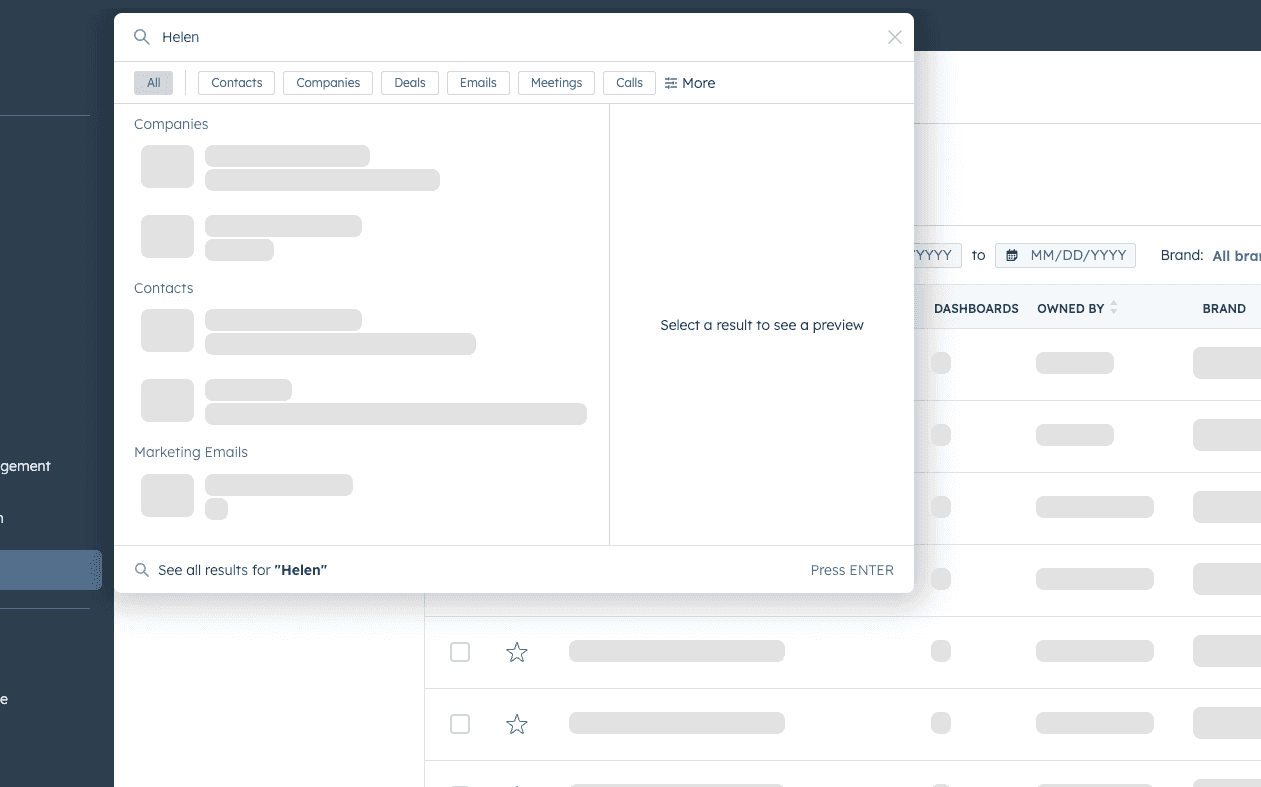
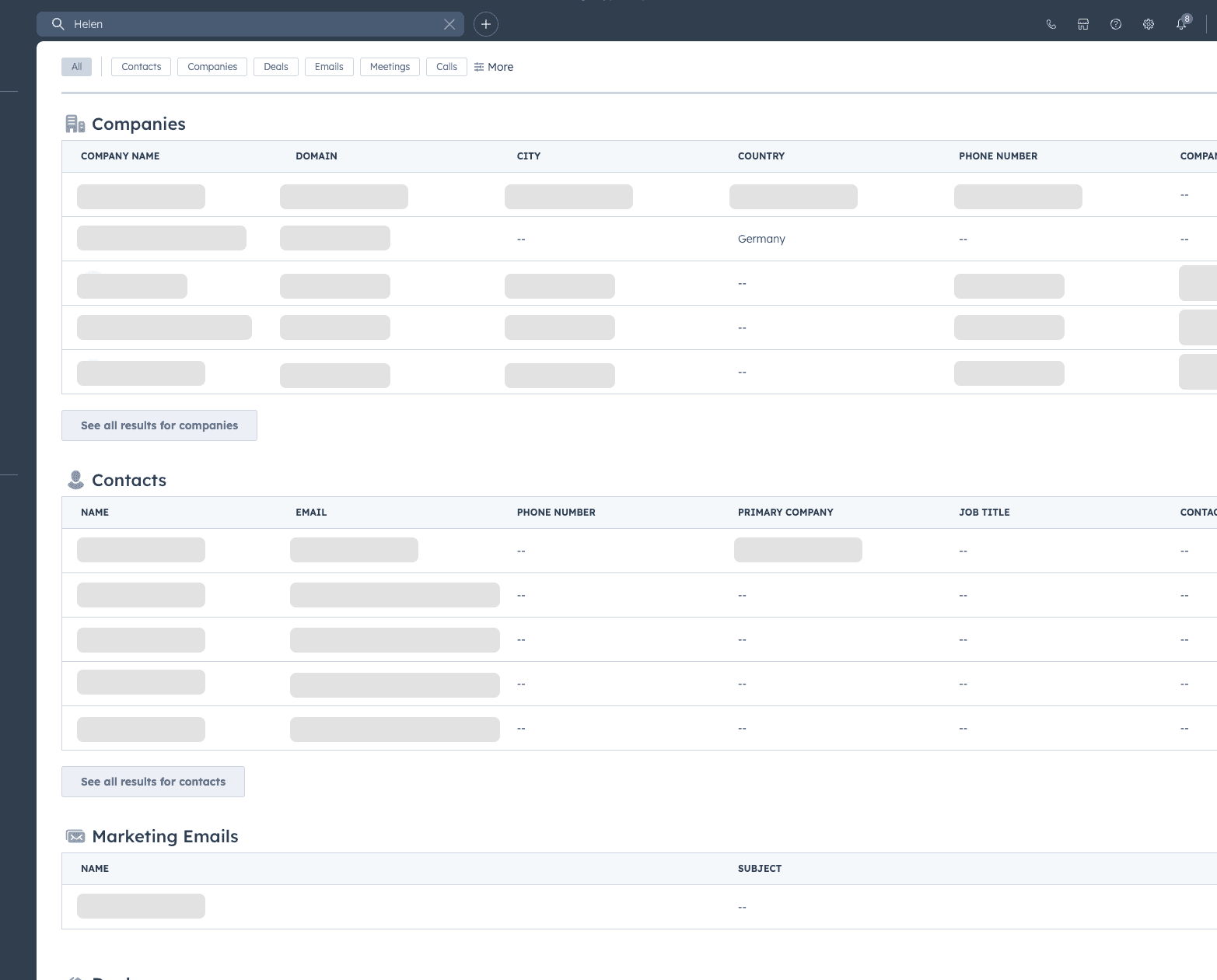
Search lived in two separate experiences: a lightweight mini search and a full-page search app. Mini search could only show a small set of results across a limited number of object types. When users needed anything beyond that, they were pushed into a different full-page experience with its own UI patterns and tiered results.
These two experiences shared very little under the hood. We were designing and building features twice because we had to support two separate codebases.
I started by learning about the product, our audience, and our technical constraints
Search was a systems-heavy product running on a backend that could only index a limited slice of HubSpot data due to infrastructure limits. Before proposing a redesign, I built a clear view of what Search needed to solve for users, where drop-offs were happening, and which constraints were non-negotiable.
Our most immediate major risk was that we were hardware-limited and couldn't index more areas of HubSpot for search. I led a partnership with another platform team to build a backend service that could pass in context about our user's job role so we could sharpen our search strategy. The result was improved result relevance, the ability to enrich search results with AI insights, and a wider scope of indexed data without additional infrastructure spend.
Search is a product that's defined by the systems that support it
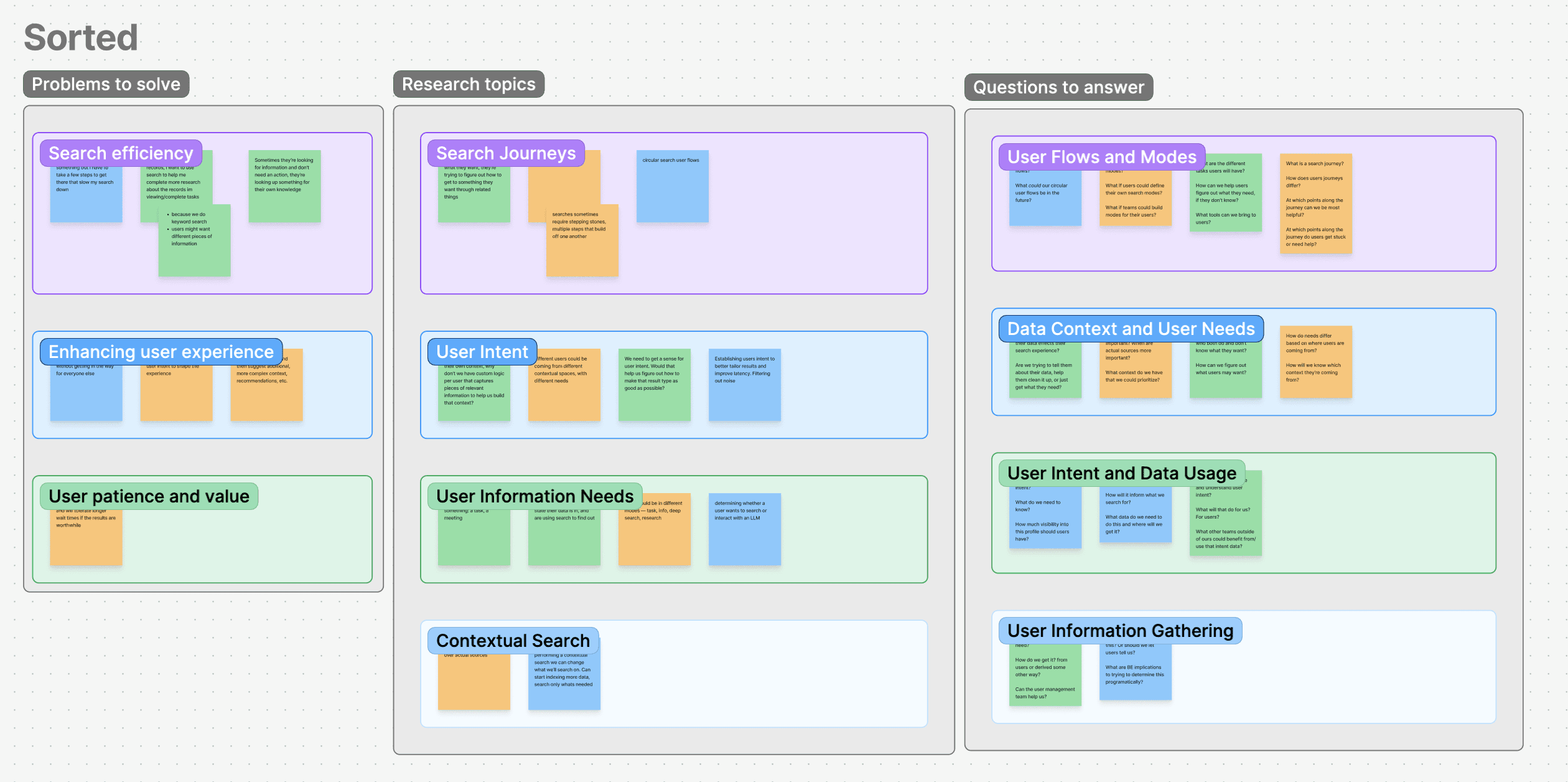
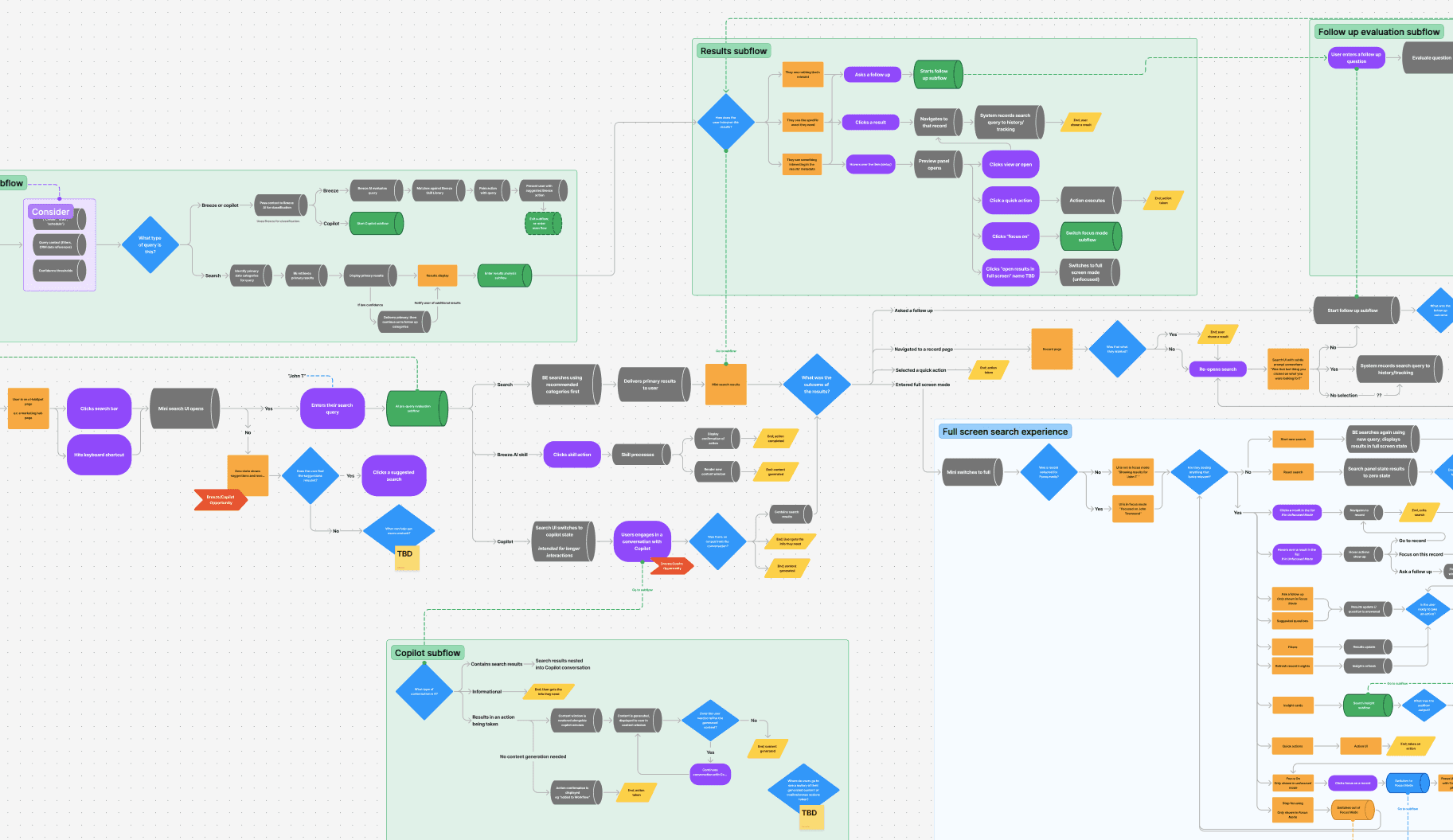
I translated what I had learned about the product into a systems map that connected user flows to the backend and AI capabilities required to support them. The map made dependencies visible, so we could make realistic tradeoffs and avoid designing features the system couldn’t deliver (ex: a chat-based search UI with scoped follow-up queries).
These diagrams drove conversations with product and engineering, letting us discuss tradeoffs and sequencing without getting stuck in UI details.
Leadership needed to see that we could deliver in the short term while building toward a product north star
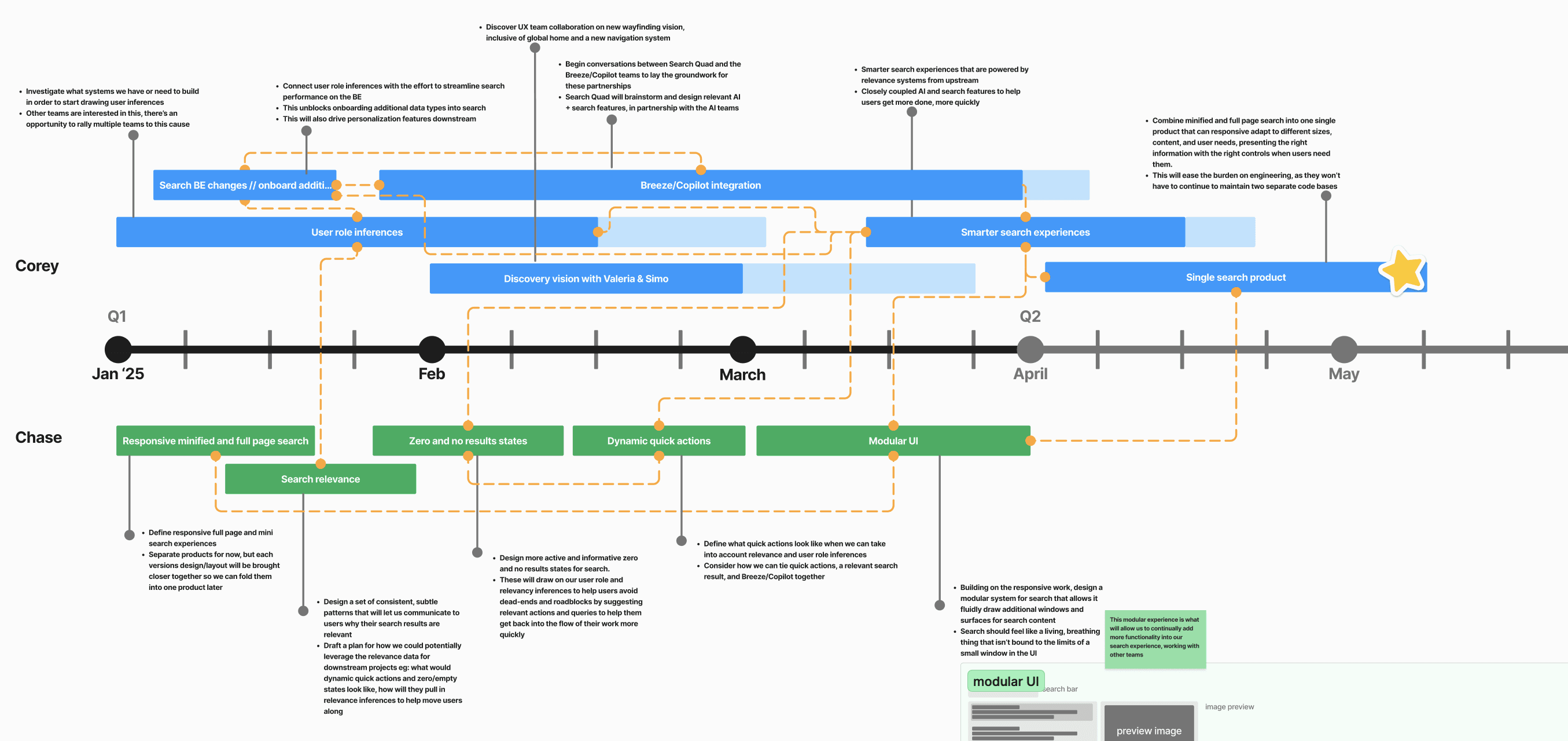
With the constraints and dependencies clear, leadership needed confidence that we could ship near-term improvements while building toward a future vision. I drafted a phased plan and proposed temporarily borrowing an associate designer, under my guidance, to take on small, high-impact enablement items while I worked ahead on the larger redesign and consolidation.
We executed this plan and after one quarter, the associate designer moved back to his team. He applied what he learned from our time working together to his own team's product and saw improved performance reviews from his manager.
The team needed immediate work that would build toward something bigger
With the plan in place, the team needed immediate work that would build toward something bigger. I sequenced the backlog based on user value, technical dependencies, and alignment to company and group priorities, so engineers could ship meaningful improvements while I drove the longer-term platform work in parallel.

We shipped a streamlined Search platform that embraced technical constraints without compromising the user experience
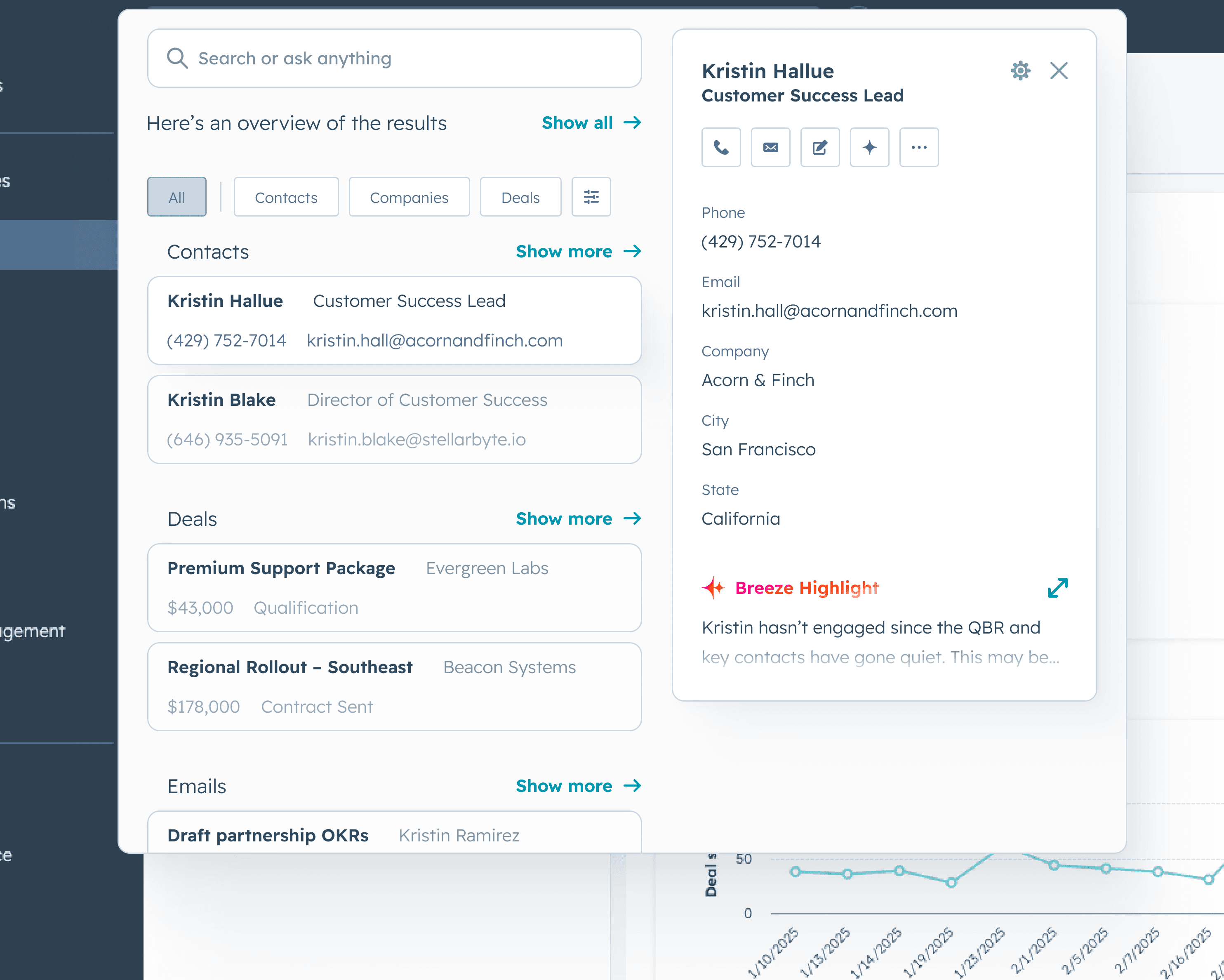
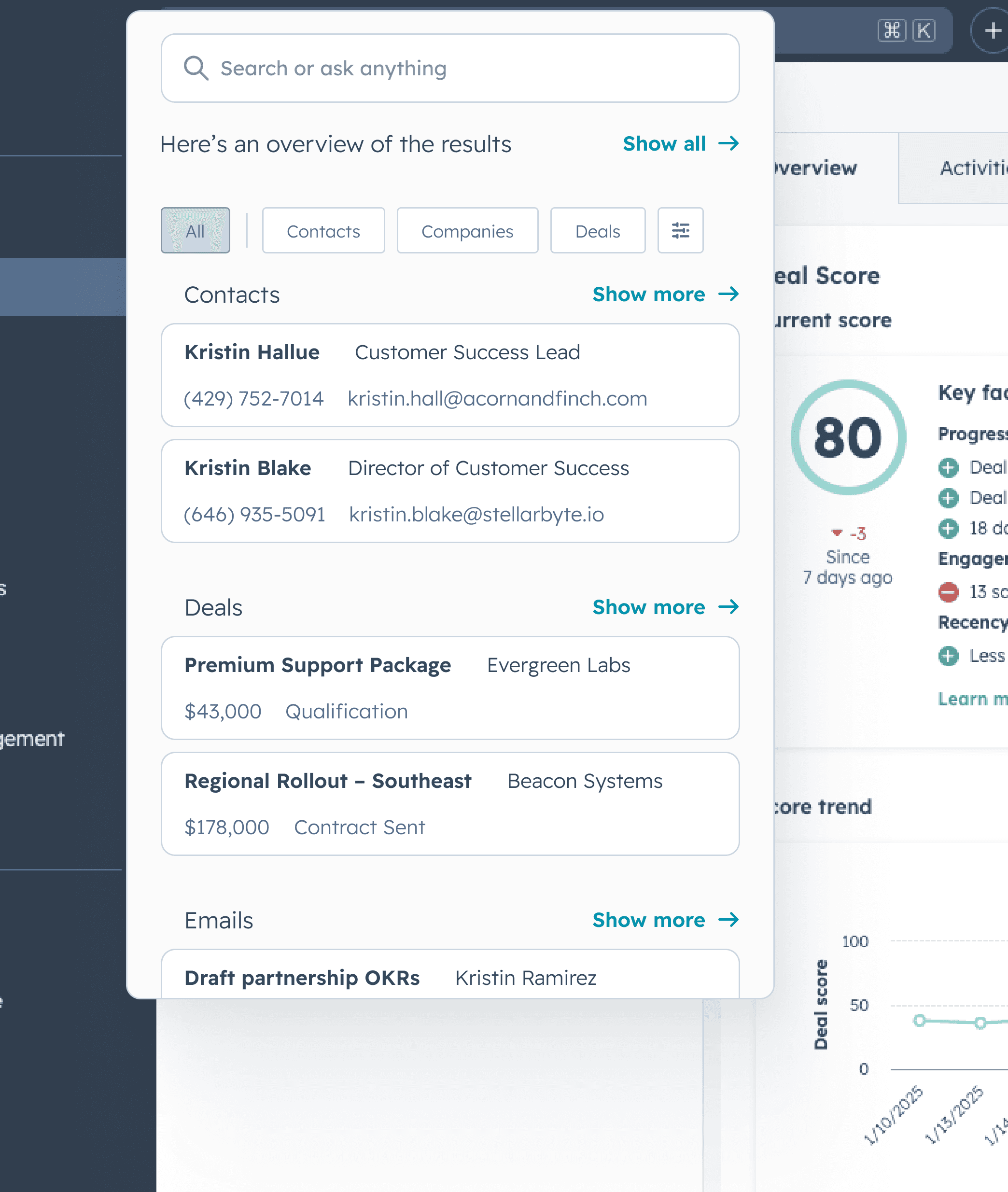
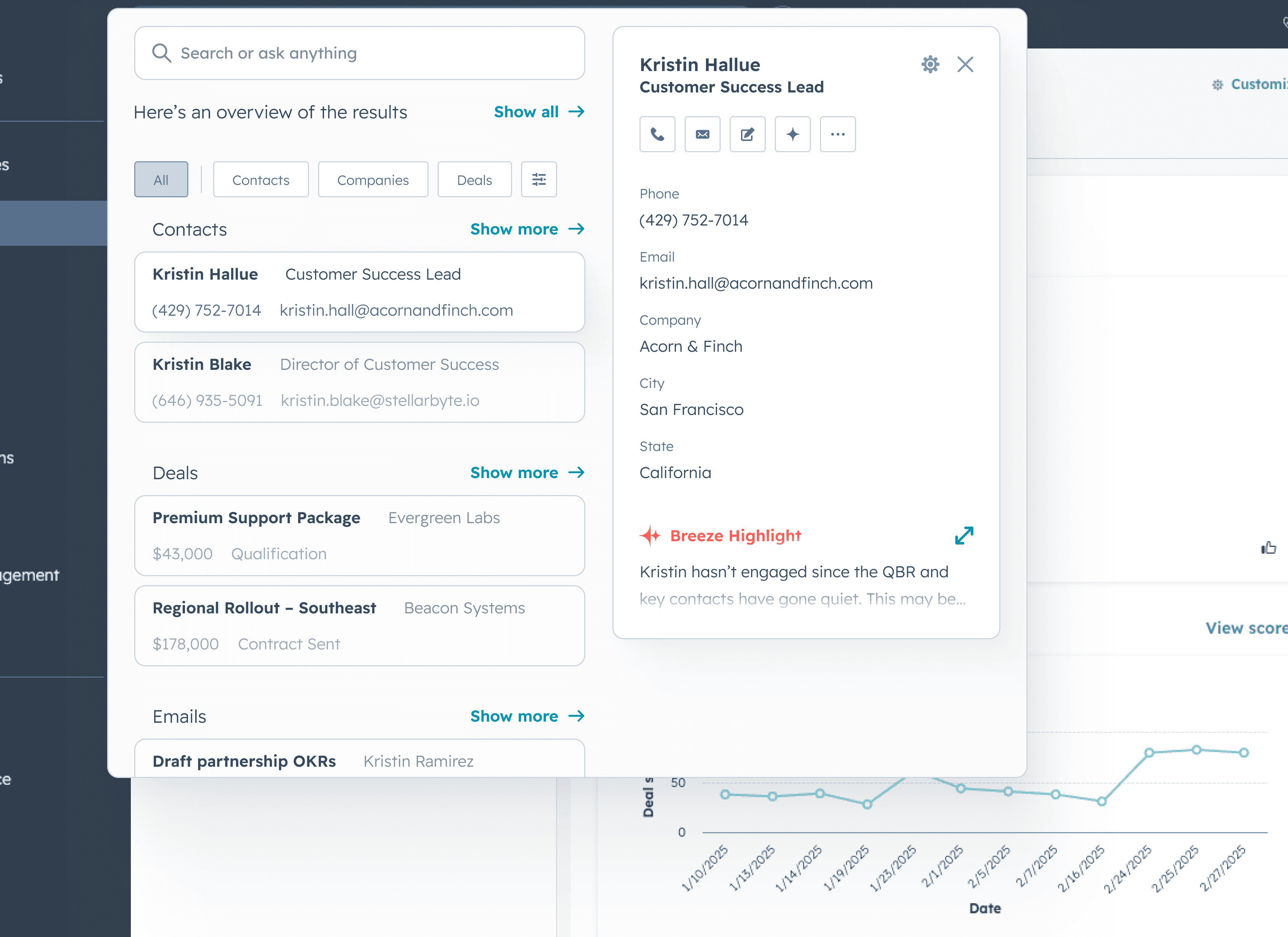
Our core use case was fast information lookup, but the backend could only return a small set of high-confidence results quickly. As part of the consolidation, I designed a single experience that stays compact when confidence is high and expands when users need more depth.
The layout balances information density with scanability, using progressive disclosure, hierarchy, and subtle focus cues to keep the experience usable at speed.
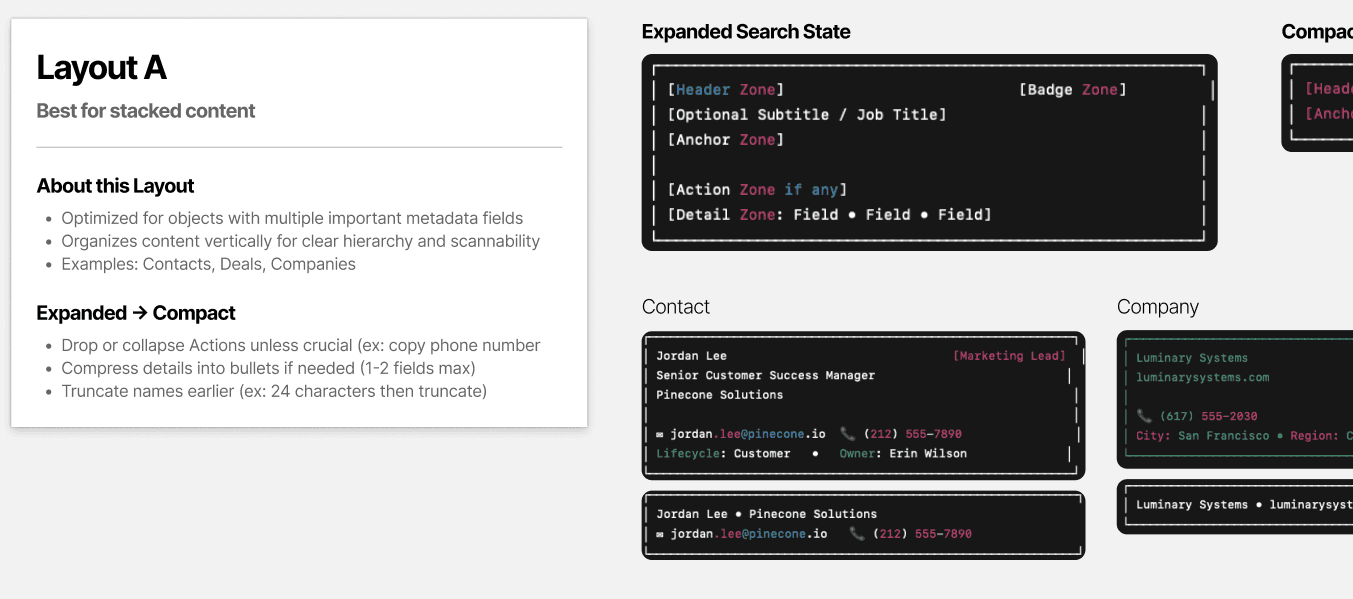
Built on a flexible zone system
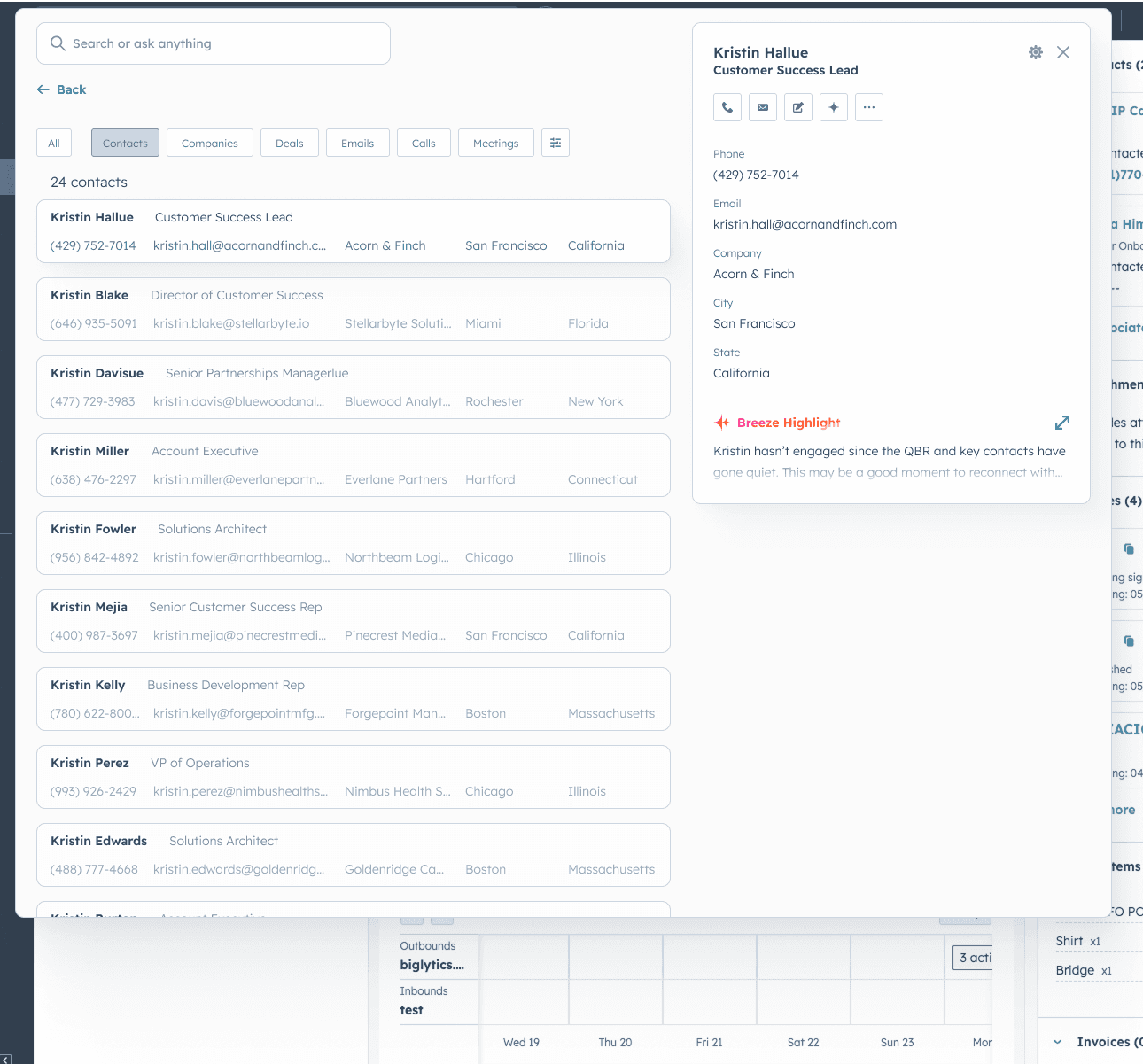
The legacy UI was rigid. When results lacked key metadata, parts of the layout would simply show an empty space. I designed a zone-based layout that flexes based on the metadata returned by the backend. The UI was able to reflow cleanly across different result types, confidence levels, and content density.
This zone system was the core mechanism that enabled consolidation into one platform and made it easier to to display a wider variety of result types without increasing UI complexity.
A fluid, redesigned search experience with headroom for future product growth
We launched a beta that consolidated two legacy apps and reduced the burden on backend systems through a more guided, intentional interaction model. The new platform creates clear breakpoints for when to stay in quick lookup mode versus when to expand depth, which made it easier to add new result types and introduce AI-assisted patterns without rebuilding the UI again.
Post-beta, I outlined how the product could evolve to support differentiated experiences across breakpoints, including where conversational and insight-oriented patterns would add value while keeping performance guardrails intact.
In six months, I led a multi-phase turnaround of HubSpot’s Global Search product. We first shipped measurable relevance and performance improvements in the existing two-app experience, then consolidated the product into a single platform designed to expand indexed scope within strict infrastructure constraints.
The work reduced the click-through rate from mini search to full-page search (31% → 17%), reduced zero-result queries (~13% → ~6%), reduced time-to-first-click by ~1s, and replaced two legacy search apps with one unified platform.